BE003
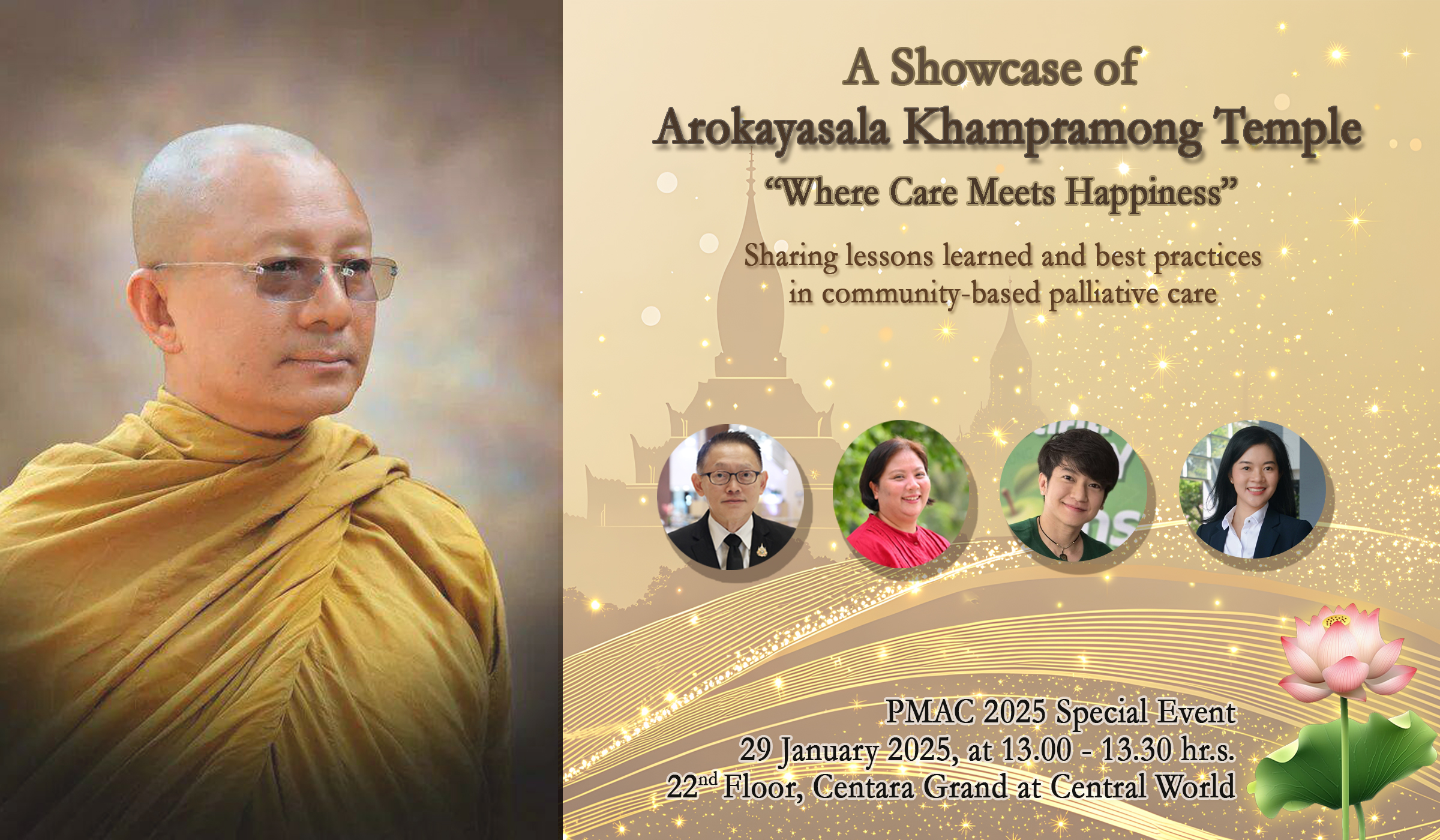
A Showcase of Arokayasala, Wat Kham Pramong: Where Care Meets Happiness
29
Jan
-

13:00 - 13:30 HRS. (BKK)
- National Health Security Office
Across Asia and globally, countries are facing the profound implications of demographic aging. Thailand, where over 22% of the population is now aged 60 and above, exemplifies this shift. As the number of older persons and patients with chronic and end-stage illnesses rises, health systems must expand beyond hospital-based care to models that are more person-centered, culturally grounded, and community-rooted.
The need for holistic palliative care—addressing physical, psychological, social, and spiritual dimensions—has become urgent. While hospital care remains dominant, it is costly, often inaccessible, and insufficient in meeting the emotional and spiritual needs of older persons and end-of-life patients. In response, Thailand has begun investing in community-based and temple-based palliative care as part of a broader movement to bring compassionate care closer to families and communities.
Temples, as longstanding centers of social and spiritual life, possess unique potential to deliver culturally appropriate care. The emergence of Arokhayasala, Wat Kham Pramong, is one of the most compelling examples of this transformation. Rooted in Buddhist wisdom, holistic healing, and community participation, Arokhayasala, Wat Kham Pramong has become a nationally recognized model for end-of-life cancer care, where patients and families not only receive treatment but also find peace, acceptance, and happiness during life’s final chapter.
The newly published book, “Arokhayasala, Wat Kham Pramong: Innovation in End-of-Life Cancer Care Through Holistic Buddhist Wisdom,” documents this journey. It provides rich evidence, lived experiences, and policy lessons for countries exploring sustainable, people-centered models of palliative care.
This side meeting will introduce the book, highlight its key messages, and offer direct insights from policymakers, practitioners, and caregivers.
- Officially launch the book documenting two decades of experience, innovation, and compassionate service at Arokhayasala, Wat Kham Pramong.
- Showcase a pioneering temple-based palliative care model, demonstrating how spiritual wisdom and scientific knowledge can synergize to improve end-of-life care.
- Share insights from policy leaders, highlighting how community-based models align with national health system reforms.
- Illustrate human-centered care through lived experience, featuring reflections from a family caregiver.
- Provide recommendations and lessons learned for governments, NGOs, and communities seeking to strengthen palliative care in culturally resonant ways.