PMAC Field Trip Site 1: Adapting Urban Elderly Care – Lessons from the Ratchaphiphat Sandbox Model
 LOCATION : Ratchaphiphat Hospital and nearby community, Bangkok
Explore how Bangkok - one of Asia’s fastest-ageing cities - is transforming elderly care. The Ratchaphiphat Sandbox Model, part of the city’s Healthy City for All initiative, integrates telemedicine, home-based services, and strong community partnerships to deliver continuous, person-centered care for older persons.
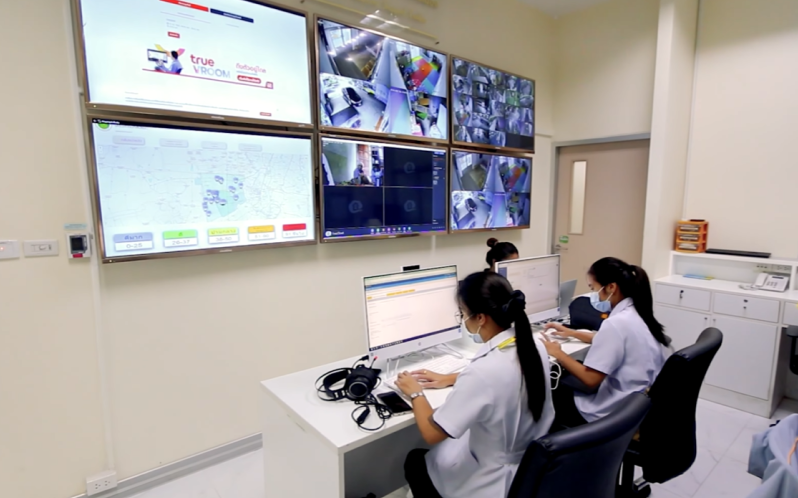
Participants will see 24/7 teleconsultation platforms, urban home-care innovations such as Commu-lance and Motor-lance units, remote monitoring systems, and collaborative service networks linking hospitals, primary care centers, pharmacies, and community volunteers.
This field trip offers practical insights into designing scalable, technology-enabled urban health systems for ageing populations.
Overview
Bangkok is becoming one of Asia’s fastest-ageing cities. As more older people live with chronic conditions and long-term care needs, traditional hospital-centric systems can no longer meet demand. The Ratchaphiphat Sandbox Model, part of the Bangkok Governor’s Healthy City for All policy, showcases how the city is redesigning elderly care through integrated services, digital innovation, home-based care, and strong community partnerships.
This field trip offers participants a first-hand look at how Bangkok is transforming health services for older persons in complex urban environments.
Background
While Bangkok has world-class hospitals, access to primary and community care—the “capillaries” of the health system—has historically been fragmented. Many elderly people living alone or with chronic conditions face barriers to timely care. The Ratchaphiphat Sandbox Model was created as a living laboratory to address these challenges by strengthening primary care, expanding home-based services, using technology to connect providers and patients, and improving the safety and independence of older persons.
The model is now a key driver of Bangkok Health Zoning, which is scaling these innovations across all eight health zones.
Key Features You Will Experience
1. Technology-Enabled Care: Telemedicine and Teleconsultation: See how Bangkok uses digital tools to make care available anytime, anywhere:
- 24/7 telemedicine and teleconsultation via LINE Official and the BMA Doctor app
- UMSC (Urban Medicine Support Center) serving as a digital coordination hub for remote care, emergency response, home monitoring, elder transport, and e-referrals
- Health Tech Hubs in malls and community spaces offering screening, teleconsultation, and access to specialists
These innovations expand Hi-tech primary care and reduce unnecessary hospital visits.
2. Home-Based and Urban Medicine Care: Bringing Services to the Doorstep: The Sandbox Model shifts hospital services into homes and neighborhoods through:
- Home Care for elderly and bedridden patients, including in-person visits, online follow-up, CCTV health monitoring, and smart IPD documentation
- Commu-lance mobile health units providing primary care, health screening, and telemedicine services directly in the community
- Motor-lance emergency motorcycles that navigate narrow alleys to deliver rapid response and perform basic medical procedures at home
- Telemedicine Ambulances enabling real-time physician consultation during emergency transport
These approaches ensure continuity of care for older persons with limited mobility.
3. Network Governance and Community Partnerships
The Sandbox Model is driven by multisector collaboration, including:
- Ratchaphiphat Hospital coordinating with BMA primary care centers, community clinics, and local pharmacies
- NHSO supporting financing and service linkages under the Universal Coverage Scheme
- Community organizations, volunteers, and civil society supporting follow-up and connecting health and social services
- Cross-sector problem-solving across health workers, district offices, emergency teams, and private partners
This network approach ensures person-centered and coordinated elderly care across the city.
Why This Field Trip Matters
The Ratchaphiphat Sandbox Model demonstrates how cities can respond effectively to rapid population ageing.
By combining Hi-touch services with Hi-tech innovations, Bangkok delivers hospital-grade care at the community level.
Participants will gain insights on:
- Redesigning urban elderly care systems
- Integrating technology, facilities, and community actors
- Scaling primary care innovations across metropolitan areas
- Strengthening person-centered long-term care
Field Trip Objectives
Participants will:
- Explore the Ratchaphiphat Sandbox Model as an integrated urban elderly care system.
- Observe how hospitals, communities, logistics services, and digital platforms are linked to support older persons.
- Learn from practical interventions across community clinics, community and home-based, and telemedicine services.
- Engage in dialogue on adapting and scaling similar models in other country contexts.
 LOCATION : Ladsawai Municipality Medical Center and community area, Pathum Thani Province
 LOCATION : Centara Grand & Bangkok Convention Centre At CentralWorld (Hybrid: VDO & On-Site Discussion)